

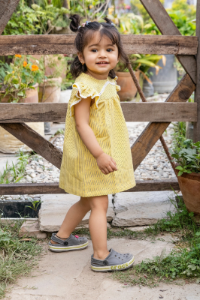
Article: Sustainable Entrepreneurship in Nepal: A Conversation with Rewati Gurung
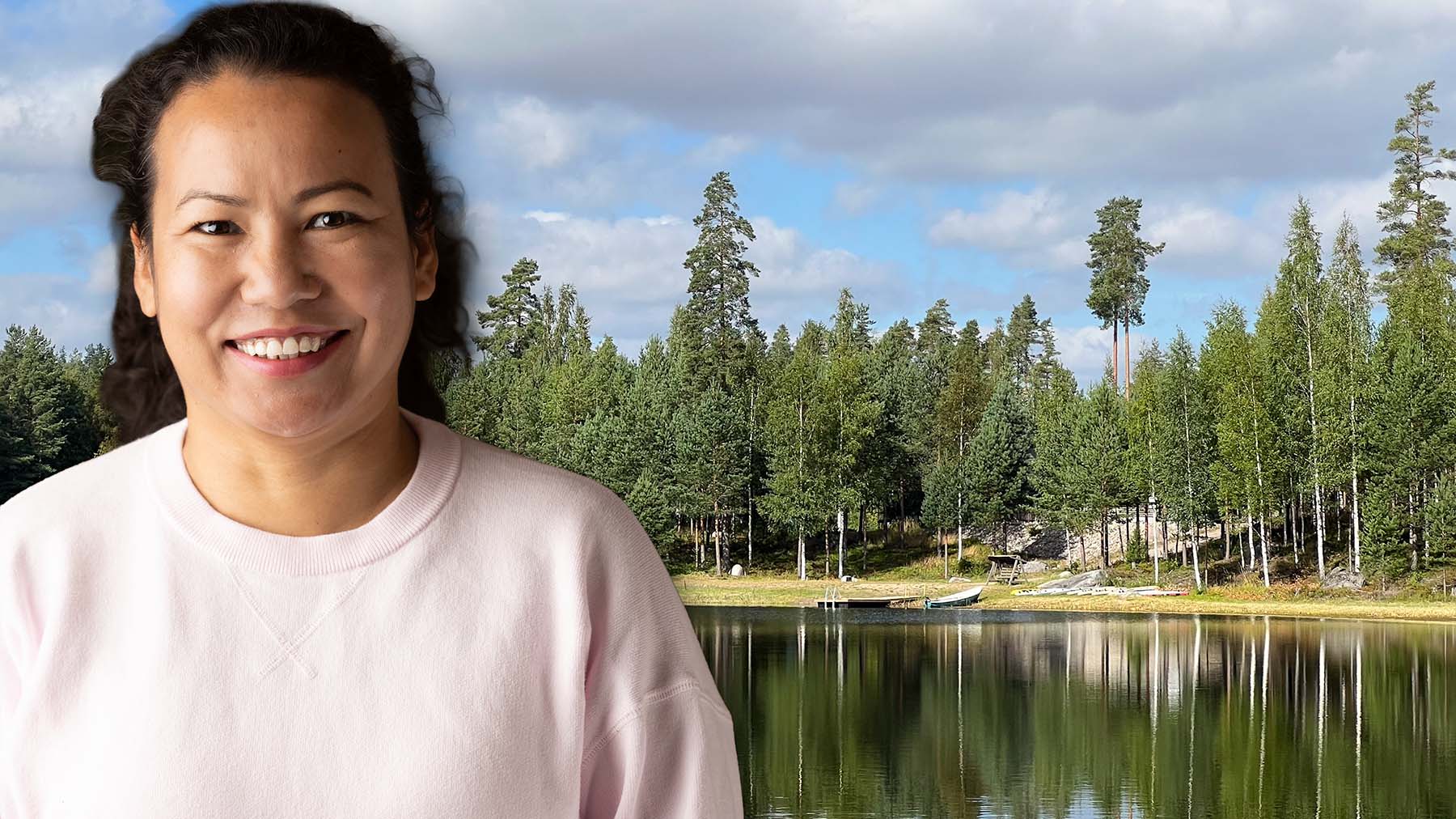
Sustainable Entrepreneurship in Nepal: A Conversation with Rewati Gurung
What does true circularity look like in a developing economy? While fast fashion and imported synthetic goods dominate global retail, local brands like Kokroma are proving that a zero-waste, community-first business model is not only possible—it’s essential.
In this transcript, Kokroma founder Rewati Gurung in Finland joins host Bhima Sherpa for an in-depth discussion on the realities of ethical manufacturing in Nepal.
Key topics covered in this interview:
-
Ethical Sourcing: Utilizing prison-woven textiles and local, eco-friendly materials.
-
The Micro-Impact of Local Business: How a small 18-person team supports over 100 indirect supply chain livelihoods.
-
Rethinking Scale: Why choosing the "Middle Path" over mass production preserves quality and job security.
-
Female Empowerment: Navigating patriarchal mindsets and building a supportive workplace culture.
Read the complete, lightly edited interview transcript below.
Sunday 26th July, 2026 - Finland
BHIMA: ...I'm so happy that you are here! How are you?
REWATI: Great! I’m great. How are you?
BHIMA: I’m good too, Didi! And how is the weather there now in Finland?
REWATI: Oh, it's good! Not hot at all—raining a bit.
BHIMA: I think it's a good way to escape from Nepal's heat at the moment, I guess.
Thank you so much for joining us! To really begin with, it would be very nice if you could briefly introduce yourself to our audience—who Rewati Gurung is, what she does, and what she is passionate about. We would really love to hear that.
REWATI: So, I'm Rewati. I’m the founder of Kokroma Nepal. Kokroma Nepal is a sustainable ethical Children’s clothing brand. Sometimes I make documentary film as well, if I find a story that I am really passionate about. Sometimes I do that as well but, at this time, I'm an entrepreneur...
BHIMA: Wow! I mean, if you could let us know—maybe there are people who really haven't heard about Kokroma Nepal. If they are hearing about it for the first time, how would you describe it? What is Kokroma Nepal?
REWATI: I think the audience will understand that it's a children's clothing brand originating from Nepal. But the main goal of the brand when we started was to empower women and create more jobs inside Nepal, but in a sustainable and ethical way. Not only in terms of the product itself, but from zero to one—whatever we do in terms of hiring people and every single step. Let's try to make everything in Nepal as much as possible and also make a positive impact, not only for the customer, but also for the people we work with. So I would like to say it's an authentic Nepali brand. You know, it's not just about putting a "Made in Nepal" tag on the product; it's genuinely authentic in everything we try to make in Nepal.
BHIMA: I have heard a lot of interviews from you, you know? And you've mentioned how it was sustaining on its own. It's a really good example of not depending on external resources. But back when you first started—I know it's been eight years, or more than eight years...
REWATI: Seven or eight years, yeah. Seven years!
BHIMA: Yeah! So when you started, how did you even get the idea? I know you have shared this a lot before, so I think it's a bit of a cliché question for you—people asking you every time—but again, I'm going to ask you the same one! Back then, what was the initial idea?
REWATI: You know, every time people ask me this question, my answer is always a bit different because it wasn't just one single thing I wanted to solve. There were so many factors that impacted making this happen. So when you ask what the initial idea was, I try to remember... so many things led to this path, you know? But to mention one thing in short: it was to not depend on aid.
So, how can we create sustainable development? How can we create jobs in a sustainable way without heavily relying on aid? Because in Nepal, we are heavily relying on aid—in terms of health, jobs, or any work—from hydropower to very small vaccines, building schools, or anything that comes up. We heavily rely on international aid.
And that's not the way forward, I think, if you want to be sustainable and self-independent as a country or as a community. We have to work from the inside, not from the outside.
Before Kokroma, my background was doing a school bag project. Moving Mountain Nepal is an NGO that I founded in 2015. Even then, my focus was: let's help each other and not rely on international aid. So, a lot of donors for that project were Nepali people working abroad in Dubai, Qatar, Australia, America, or inside Nepal.
In that project, whatever was donated, we worked with rural government schools that didn't have proper road access and provided all the educational materials up to the primary level. All the materials we were giving were made in Nepal—we tried to make as much as we could locally.
So the funds donated by Nepali people for Nepali children stayed in Nepal, and in that process, created more jobs.
But you know, that's also not the complete solution. What is the solution where we can help people without relying on aid? So I came up with the idea: we need to create jobs inside Nepal that impact people's lives in a positive way.
Whether it's the workers, the customers, or other suppliers, everybody who engages in the process of Kokroma should be positively impacted without relying on somebody's donation or aid.
So that was the main idea I came up with. I asked myself, "Okay, what can I do so that we don't always have to ask for money or say, 'Please help, we are poor, the children need education, or women need empowerment'?"
"Because then we are always asking for money, and that's not a sustainable way."
So Kokroma was born out of the passion to solve our societal problems from the inside—within our own society—based on what resources and skills we already have. Because of that, every vulnerable woman I met already had the skill to make clothes.
And there was a demand for children's clothes! Especially in Nepal, there are very strong needs for specific types of traditional clothing that aren't easily available everywhere. We have an emerging population, raw materials, and skills—we can create within ourselves, you know? We don't always have to rely on raw materials or people from another country. So yeah, that was the initial idea: to be independent and sustainable in terms of finance, raw materials, and skills.
BHIMA: Yeah! I feel like, as you said, we often build something out of perceived scarcity, but your mindset was one of abundance—that there was already so much available. It wasn't like we were missing something, but rather using what we already had and making it more sustainable. That idea itself runs on circularity.
I think recently, seeing reductions in international aid, a lot of impacts have been felt—especially in low- and middle-income countries and the businesses within them. It is a very good reminder of how a sustainable vision is always important so something can run on its own.
Didi, the idea behind Kokroma Nepal is very inspiring to me in learning about circularity and sustainability. Regarding the products and materials, could you highlight how things are resourced at the moment to touch base on the sustainability side?
REWATI: Okay! Let me tell you the background story of sustainability for me. In 2015, I was in Finland and had a presentation meeting with the founder of Rovio Entertainment (the creators of Angry Birds).
He asked me one question then: "What is the sustainability of your project?" That was for the project I was doing with schools—distributing school bags and educational materials. That was the first time I had ever been asked about the sustainability of problem-solving. That was in 2015, and I started Kokroma in 2019.
"But for four years, there wasn't a single day where I didn't think: What is sustainability? What did he mean by that?"
So I did research, and that formed the foundation for me to understand what sustainability truly means when addressing issues like education. It took a long time—almost four years—to fully grasp it.
So when I realised, "Okay, we don't want to rely on aid; we want to create jobs within Nepal," the question became: how do we make that sustainable?
Children's clothes could be one idea, but how do we source raw materials sustainably? If we bring them from China or India, how sustainable is that? Can we make them in Nepal? Who is making them, and how are we sourcing them?
To start Kokroma, sustainability wasn't just about raw materials. I started by purchasing second-hand sewing machines, second-hand tables, and second-hand furniture. Because that is sustainability. It’s not just the final product—you have to live it. Even now, 85% to 90% of Kokroma's furniture and equipment are second-hand.
It's not only sustainable; it's economical and good for the environment, especially when so many businesses were shutting down.
Kokroma's sustainability doesn't start only with sourcing raw materials, but with what we do every day. It's zero-waste—we don't throw away fabric scraps. We constantly ask: Is this sustainable?
When doing research, I noticed most fabrics came from India or China. I asked, "Can we make it in Nepal?" Yes, we can. Then, "How can we create a positive impact through it?" I found an article in The Kathmandu Post mentioning that inmates in prisons weave textiles, but nobody was buying them, leaving them overstocked and unable to pay the weavers inside.
That's how I found out about prison weaving! If I bought from them, they would get paid. It acts as a form of rehabilitation—while in prison, they can weave, earn a living, and support their families back home. And it's made in Nepal!
So, we outsource a lot of our textiles from prisons, even now. Today, because they cannot fulfill 100% of our demand, we balance it with other local suppliers, but prison-woven fabric remains our priority.
Beyond textiles, there was the challenge of accessories. Can we source them in Nepal? Things like elastic are made in Nepal, but buttons—like snap buttons—are mostly imported. Still, we try to use eco-friendly options, like coconut or mother-of-pearl buttons. We are always doing research for better local alternatives.
BHIMA: I think it comes down to the intention to ask thoughtful questions about what is sustainable within Nepal.
I'm also curious: baby clothes are often outgrown very quickly. I have nieces and nephews, and they grow so fast! Have you thought about creating a platform where Kokroma products can be exchanged, passed on, or recycled within families? Has that idea ever crossed your mind?
REWATI: Yes! Everything has been thoughtfully designed. Our approach to sustainability in that regard is to make clothing that is durable.
Commercial baby clothes often can't handle frequent washing, so they wear out quickly and get thrown away. But baby clothes need to be washed every day!
Our idea is to make clothes extremely durable so they survive countless washes and can be passed down to siblings, cousins, and neighbors. From the very beginning, I was focused on making items that last for generations. Our stitches are very strong, and thousands of customers have confirmed that Kokroma clothes are exceptionally durable.
We even ran exchange programs where customers could bring back old clothes for a discount. But customers told us they preferred keeping them to hand down to their next child or relatives!
That hand-me-down tradition is so beautiful and more valuable to them than trading items back in. I’ve even seen secondhand Facebook Marketplace listings in Nepal where Kokroma clothes sell for high prices because of their quality! So while we tried formal buyback programs, people naturally prefer to pass them down within their networks.
Did that answer your question?
BHIMA: Yes, absolutely! Focus on product durability is a angle I missed when researching. In Nepal, we have a strong culture of inheriting clothes from older siblings. If the product is durable, why not keep passing it on?
REWATI: Exactly. Commercially produced garments often don't last more than a few washes because they undergo heavy chemical processing, bleaching, and harsh dyeing. At Kokroma, we keep materials as natural and raw as possible so they survive generations of washing. That's the main feedback we get from customers.
BHIMA: That leads into a follow-up question. Whenever we talk about sustainability, circularity, or ethical branding, the price point is usually higher than fast fashion—which is understandable given fair wages and quality materials.
In the context of Nepal, where many women are still financially dependent on husbands or family, do you feel sustainable and ethical products like Kokroma are truly affordable for the average Nepali mother?
REWATI: Considering the value we bring—empowerment for vulnerable women, community support during crises, and local manufacturing—I believe Kokroma offers great value at an affordable price.
However, people view purchases in two ways:
1. Short-term cheapness: Buying something low-cost that doesn't last and does not positively impact the local economy.
2. Value-driven investment: Buying something comfortable, durable, and ethically made that directly supports the community.
"Our customers are those who care about the story and impact behind their purchasing power."
In fact, I’d argue it is more economical to buy Kokroma! Instead of buying four or five cheap items that quickly ruin, you buy one or two durable pieces that last.
When you compare our prices to imported clothes from places like Bhat-Bhateni or shopping malls—which are mostly mass-produced in China—our prices aren't actually that different. It just depends on what you are comparing us against.
Money spent on imported goods leaves Nepal. What we do stays in our society.
We do so much direct community work that isn't even advertised on our product tags. For instance, during COVID-19, we provided free masks and aprons to healthcare volunteers. We support mothers living without resources in slum areas.
During the Roshi River floods a couple of years ago and the Jajarkot earthquake, we were on the ground providing warm clothes for children. As a small company, we give back continuously because our customers support our mission. A foreign manufacturer isn't going to show up to help local communities during a flood. Last year during the severe flooding, we even distributed baby mattresses to use as bedding for rescued animals.
We do these things because we are part of the local Nepali community. It comes down to intent and priority. Some people quickly judge and say, "Oh, it's just a business," but there is significant philanthropic work integrated into our operational model.
BHIMA: Yes! It's about serving the community and creating long-term value, rather than just fast-fashion output. Working with vulnerable populations and stepping up during disasters is such an important aspect.
Looking ahead to the next 5 or 10 years, if Kokroma expands production, can it maintain these core sustainable values, or does scaling usually come at the expense of quality and mission?
REWATI: People constantly ask me, "When are you going to scale?" Investors are often ready to fund rapid expansion. But mass-producing thousands of items isn't sustainable for us.
We want to create meaningful products through a slow, deliberate process where every piece is made with care. Mass production goes against our definition of sustainability.
For seven years, we've kept a tight-knit team. I want to look after each team member individually. If I had 200 women working for me, I couldn't know their personal stories or help solve their individual challenges.
We have around 18 women on our team who support each other and take real pride in their work. Even while I am currently in Finland, they manage operations independently because they take ownership of Kokroma.
Financially, staying at this size is a conscious decision. My philosophy is to follow the Middle Path. You shouldn't blindly pursue 100% idealist sustainability if it causes the business to fail—that isn't sustainable either. You must find a balance.
We choose team members carefully based on who genuinely needs long-term support. True sustainability isn't paying a high salary for three months and then closing shop; it's offering a stable, reliable income so employees can plan their lives, feed their families, and send their children to school.
Hiring dozens of people only to lay them off months later hurts the community far more than maintaining a smaller team with long-term job security and on-time pay. That long-term commitment is fundamental to Kokroma’s ethics.
BHIMA: That makes total sense. Listening to you, it's clear that sustainability isn't just about the physical product—it's a core mindset that touches the team, the community, and long-term planning.
What is it like working with your team day-to-day, especially since it's predominantly composed of women?
REWATI: It is so much fun! In the beginning, people didn't know how to categorize us: "Is it a factory? Is it an NGO?" I told them it's in between—a business solving societal problems sustainably. Now, the team understands the vision completely and feels immense pride in what they do.
"Working with women brings a very gentle, creative, and nurturing energy to the workspace."
I put a lot of effort into building our workplace culture early on. Once a positive culture is established, everything runs much smoother.
Kokroma has a wonderful culture where the women support each other—it's almost a space for collective healing. Every woman carries her own story, and the workshop has become a supportive sisterhood.
They take true ownership of Kokroma. That’s why we are very careful when bringing in new members, ensuring their energy aligns with the environment.
Nepali women, in particular, often navigate a tough patriarchal society, yet they find joy in small things and have so much positivity to offer their families and workplaces. I love working with them. They support each other.
They become a part of the healing process. Every woman has a story, and it's not just a workplace for them—it’s like a sisterhood inside. It’s such a beautiful place to be.
They take true ownership of Kokroma and take real pride in it. That's why we are very careful when bringing in new members. People come with different energies—some bring their trauma, while others bring positive energy. So we always consider: Will it work out? Will it suit the environment? Will they enjoy being part of the team?
So far, it has been very good. I love working with women. Especially as Nepali women, we have been beaten down by a patriarchal society, yet women are the ones who find happiness in small things and have so much positivity to offer.
They have so much to offer to their families, the community, and the workplace. I love Nepali women—and women all around the world, of course! Women truly have this magical energy. When you enter a workplace led by women, you can immediately feel that leadership energy.
BHIMA: Women leaders bring such a distinct, empathetic energy to a workplace. You can instantly feel when a business is led with that kind of thoughtful leadership—I see a similar approach with projects like Koseli Nepal led by Mona Didi as well. There is so much thought and empathy involved in building a team like that.
Thank you so much for sharing that with us! I also wanted to ask about the current context and the new government situation...
REWATI: The benefit of having a sustainable business locally is that even if our revenue isn't huge compared to import/export businesses, a small revenue stream supports far more than just our 18 direct staff members. There are over 100 indirect beneficiaries—weavers, dyers, thread spinners, button makers, delivery riders, and sellers.
We create so many jobs even within a small revenue model. If you run a business importing children's clothing from China to sell in Nepal, your revenue might be 10 times higher, but you might only generate jobs for 3 to 5 people. Do you see the difference in impact?
Despite our smaller scale, we create numerous jobs because we try to do everything inside Nepal.
For instance, we employ two women just to wash and sun-dry our fabrics. We don't use harsh chemicals—we use natural soap nuts (rita) harvested from forests, and we utilize Kathmandu's free sunshine to dry everything.
If our products were mass-produced by machines in China or India, those local jobs wouldn't exist.
Furthermore, local workers collect our scrap fabric to recycle into quilts and mattresses. It forms a complete circular economy where everything is interconnected, creating a massive positive impact. Importing and selling might yield higher individual profit margins, but it creates very few local jobs.
BHIMA: Wow, I never thought about it in quite that way. Thank you for sharing that! We often only evaluate the final outcome or end product. But the broader socio-economic impact of a business model like this is often overlooked.
Seeing how those 18 direct jobs ripple out into the broader community really highlights how many livelihoods are positively touched.
Having operated in Nepal for over eight years, what do you see as the biggest gap or obstacle in children's clothing and circularity? Is it our heavy reliance on imports, or does it stem from structural issues within Nepal's government or community systems?
REWATI: I think it goes both ways, but I strongly believe we hold power as individuals and consumers to drive change and raise awareness.
Regrettably, people in government administration often lack awareness regarding sustainability. Most positive change is currently being driven by private individuals and dedicated stakeholders, partly due to exposure and international education. If government bodies could adapt to match this growing awareness, it would help immensely, but right now, official policy is lagging far behind.
"Being in Finland right now, I see how much structural effort goes into the circular economy."
They have official exchange centers where people can donate or purchase second-hand furniture, kitchenware, and clothing at minimal prices. The fees charged go toward maintaining the system and creating employment for staff who manage inventory and collections.
I often think about how easily we could implement similar systems at the local municipal (Nagar Palika) level in Nepal!
Instead of dumping everything into mixed waste bins—where sanitation workers sort garbage without masks or gloves—we could organize proper waste streams.
Nepal actually has long-standing traditional circular practices; for example, selling cardboard boxes to local collectors (khalisisi) for money. We have had these systems culturally for generations. If the government organized waste management systematically to create dignified jobs rather than focusing purely on taxation, it would transform the system.
BHIMA: I agree. European systems are strict—if you mix paper with organic waste, waste collectors simply won't pick it up. A clear monitoring and enforcement system would be so beneficial for a small country like Nepal. We already have traditional cultural roots in reusing and repairing; we just lack modern administrative integration.
REWATI: Exactly! Our traditional utensils and kitchenware were passed down through generations—that is inherent sustainability.
Recently, however, people have started buying cheap, synthetic fast fashion without knowing how to dispose of it properly when it ruined. Does Nepal have the infrastructure to recycle tons of synthetic polyester waste? We risk becoming a dumping ground for cheap imported materials.
Governments need to step in with policies—similar to bottle-deposit systems where you receive money upon returning containers. Fast-fashion importers should bear the cost of textile waste management.
At Kokroma, we stick to 100% natural cotton. It lasts longer, can be repurposed, and eventually biodegrades naturally into the soil without harming the environment.
BHIMA: That end-of-life cycle is something fast-fashion importers rarely plan for.
I'd like to read a comment from a viewer, who suggested: "If we had reverse-vending machines for plastic bottles in Nepal that gave out coupons or small cash incentives, people would collect them rather than littering."
REWATI: Absolutely! Financial incentives work. In Europe, people collect bottles because even 5 or 10 cents per bottle adds up.
In Nepal, when I go trekking near my home, I end up spending the whole trip picking up discarded soda bottles and candy wrappers. My back hurts, and I can't even enjoy the nature because of the trash. Waste management education needs to start early in schools.
To be honest, I wasn't fully conscious of these issues myself until that founder asked me about sustainability back in 2015!
Ever since that question, I ask myself daily: "Is what I am doing sustainable?" Having to answer that for myself fundamentally shifted how I live my life and run my business.
BHIMA: It really does change your perspective. Seeing public littering can make you so frustrated when you care about the environment!
REWATI: In Nepal, household sustainability is still very achievable. At my house, food scraps go to local farm animals or compost for my terrace garden. Paper, glass, and metals are separated and sold to recyclers. You can actually earn money by segregating household waste, but people need to build the habit.
BHIMA: Dedicated organizations are doing great work advocating for circularity in Nepal, but shifting consumer mindsets takes time.
Switching to an ethical product or an eco-friendly toothbrush is just one small step—the broader challenge is adopting a sustainable mindset across all areas of life.\
For aspiring female entrepreneurs who want to start a meaningful, sustainable business in Nepal, what is the single most important question they should ask themselves before starting?
REWATI: They should ask themselves: "Why do I want to do this, what value does it bring, and is this a sustainable way to solve the problem?"
Don't start a business purely for profit—focus on the impact you will leave behind. As women, we are often deeply connected to our communities and environments. I have immense respect for women building businesses in rural areas. It saddens me when people focus strictly on material gain while ignoring their ethical responsibility to society.
BHIMA: Beyond the obvious economic challenges, do you feel Nepali women face invisible barriers when starting their own ventures?
REWATI: The barriers aren't invisible—they are completely visible everywhere! Starting a business as a woman is ten times harder.
I heard on a podcast recently that starting a venture often stems from dealing with personal trauma. That trauma can either break you or drive you to build something meaningful.
Societal judgment is a major obstacle. Our society can be very hypocritical and critical of women. It takes tremendous courage to ignore the noise, not judge yourself, and push forward despite the fear of standing alone.
Fortunately, modern technology has democratized access to information. Previous generations didn't have easy access to educational resources, but today, if you have an internet connection and passion, you can build a business from your phone. That is a privilege young entrepreneurs should leverage.
BHIMA: What do you think holds women back the most? Is it societal judgment?
REWATI: I still battle internal patriarchal mindsets that were conditioned during childhood! Unlearning those subtle expectations takes constant effort.
Women possess incredible natural resilience and creative power. Sometimes, patriarchal structures try to undermine that strength by creating unnecessary barriers.
"When I face resistance, my formula is to think like a lioness: when you are wounded, take a pause, sharpen your skills, build your strategy, and return stronger. Learning when to pause is crucial."
BHIMA: Taking a strategic pause is so important in a world obsessed with constant productivity.
REWATI: Exactly. When male investors or potential partners talk to me about scaling Kokroma, they focus strictly on numbers and financial growth. But profit alone doesn't drive me—impact, care, and quality do.
Women are often cautious risk-takers because our society penalizes female failure far more harshly than male failure. If a man fails in business, he can try again; if a woman fails, society uses her as a cautionary story. That's why women feel immense pressure to execute carefully.
BHIMA: What final message would you give to a young Nepali woman watching this who wants to build something meaningful?
REWATI: My practical advice is: gain real-world experience first.
Entrepreneurship is overhyped online with messages like "be your own boss." I couldn't have built Kokroma in my early twenties because I lacked life experience, emotional maturity, and people skills.
Work for other companies first, learn how to manage real-world challenges, and develop your interpersonal skills.
You don't have to be a founder to make an impact—artists, specialists, and key team members contribute just as significantly. Figure out what environment brings you fulfilment before taking the leap.
BHIMA: You project such a calm, grounded energy when you speak. What is your secret to maintaining that composure?
REWATI: (Laughs) People often say that, but inside my mind, I am constantly overthinking!
Taking breaks helps me reset. In Nepal, running a business requires managing constant urgency, which can feel chaotic. Learning to step back, recharge, and give yourself permission to rest without guilt is an ongoing process for all of us.
BHIMA: Unlearning that constant urge to be productive is definitely a journey. Thank you so much, Rewati Didi, for spending your Sunday with us and sharing your wisdom!
REWATI: Thank you so much for having me!